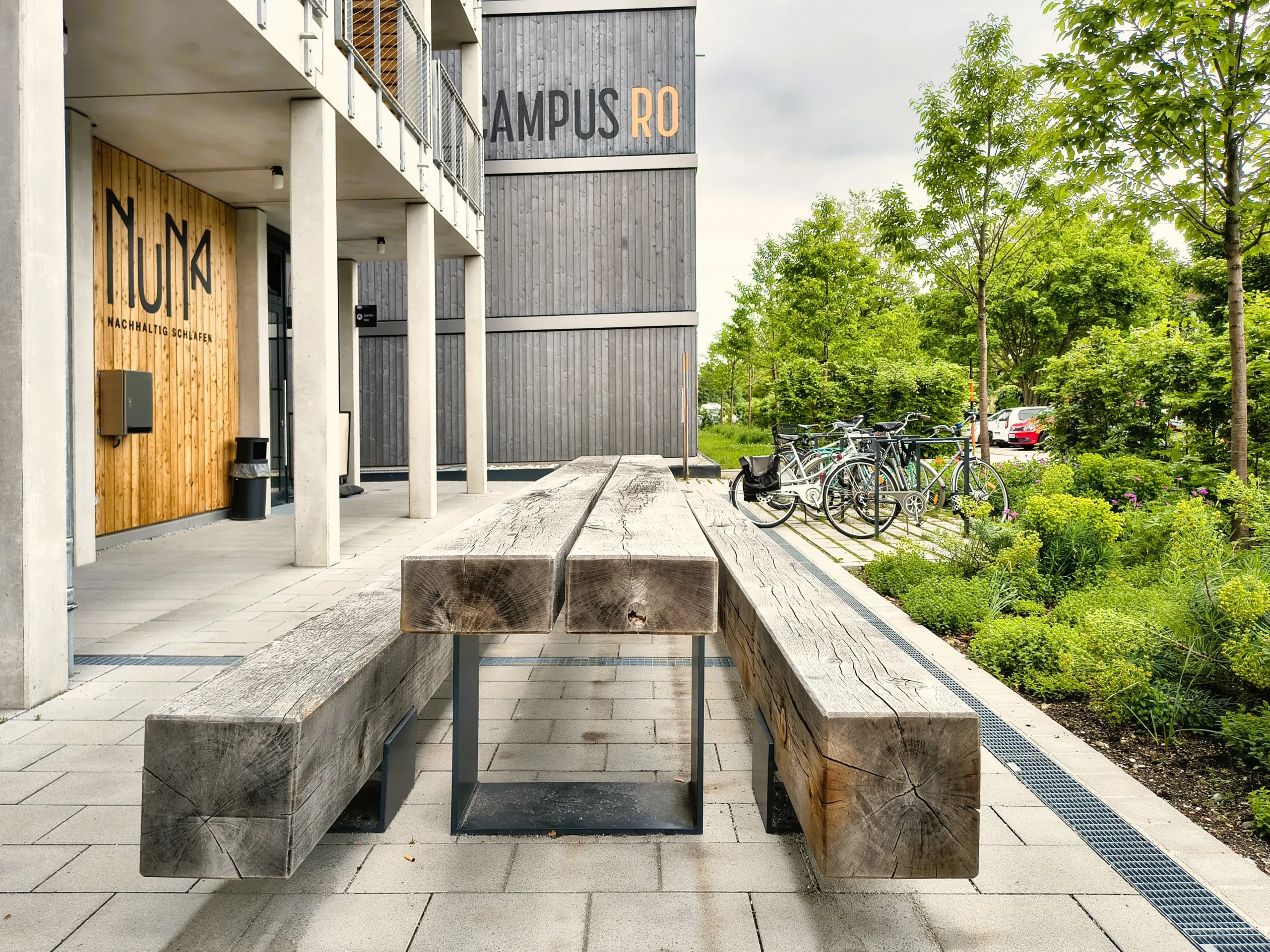
Campus Ro, Rosenheim, Germany
- Project type Residential & Commercial / Roof and Facade Greening / Square Design
- Planning Phases Competition (1st prize), LPH 1-3 (basic evaluation, preliminary design, design)
- Planning time 2018-2019
- Construction Time 2021-2022
- Responsibilities Project management Competition, and detailing: M. Mladenova on behalf of Jörg Weisser (FSWLA office)
- Client CAMPUS RO GmbH & CO.KG, Rosenheim
- Project Partners Müller Schlüter Architectural Office, Wuppertal
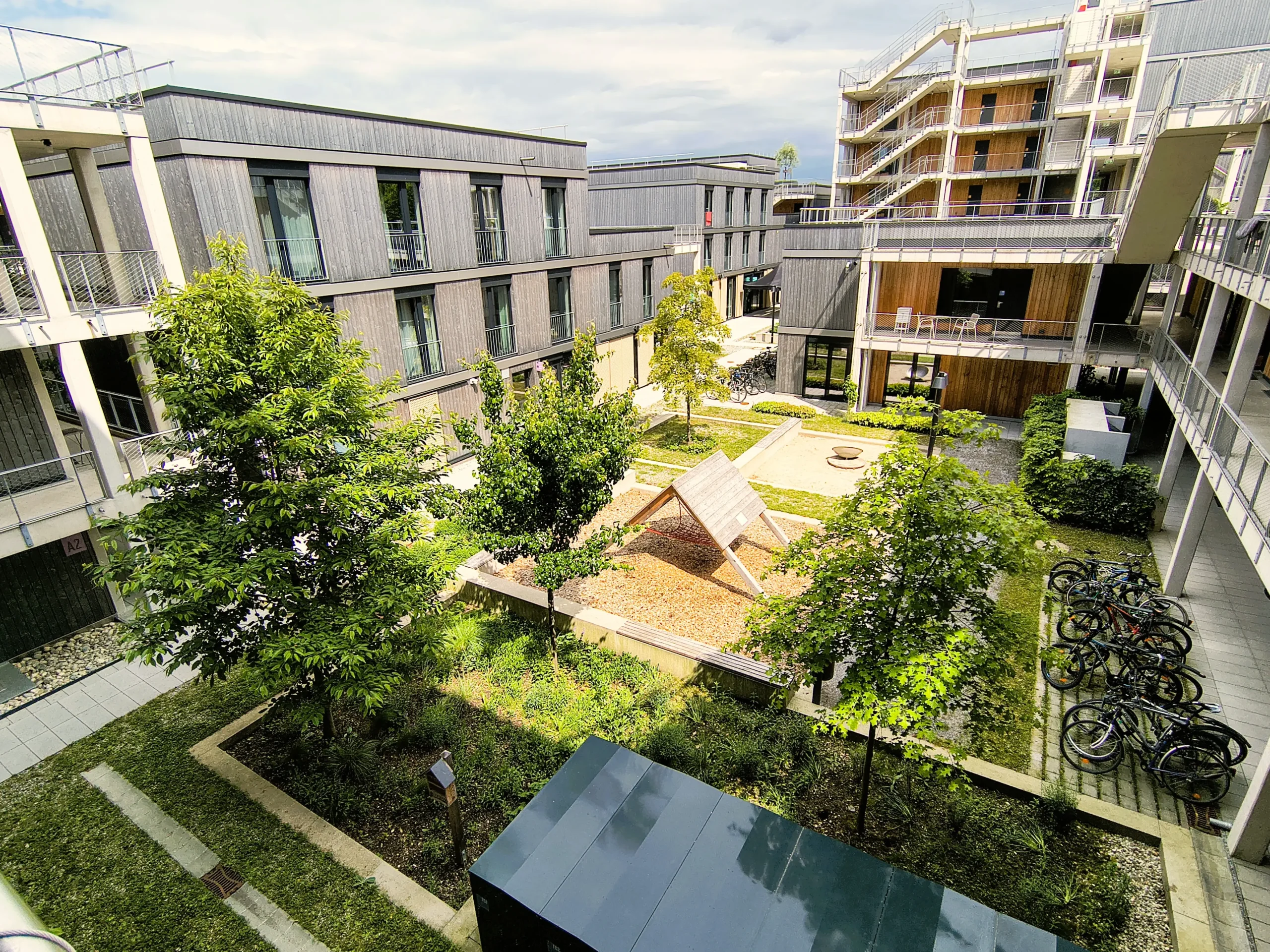
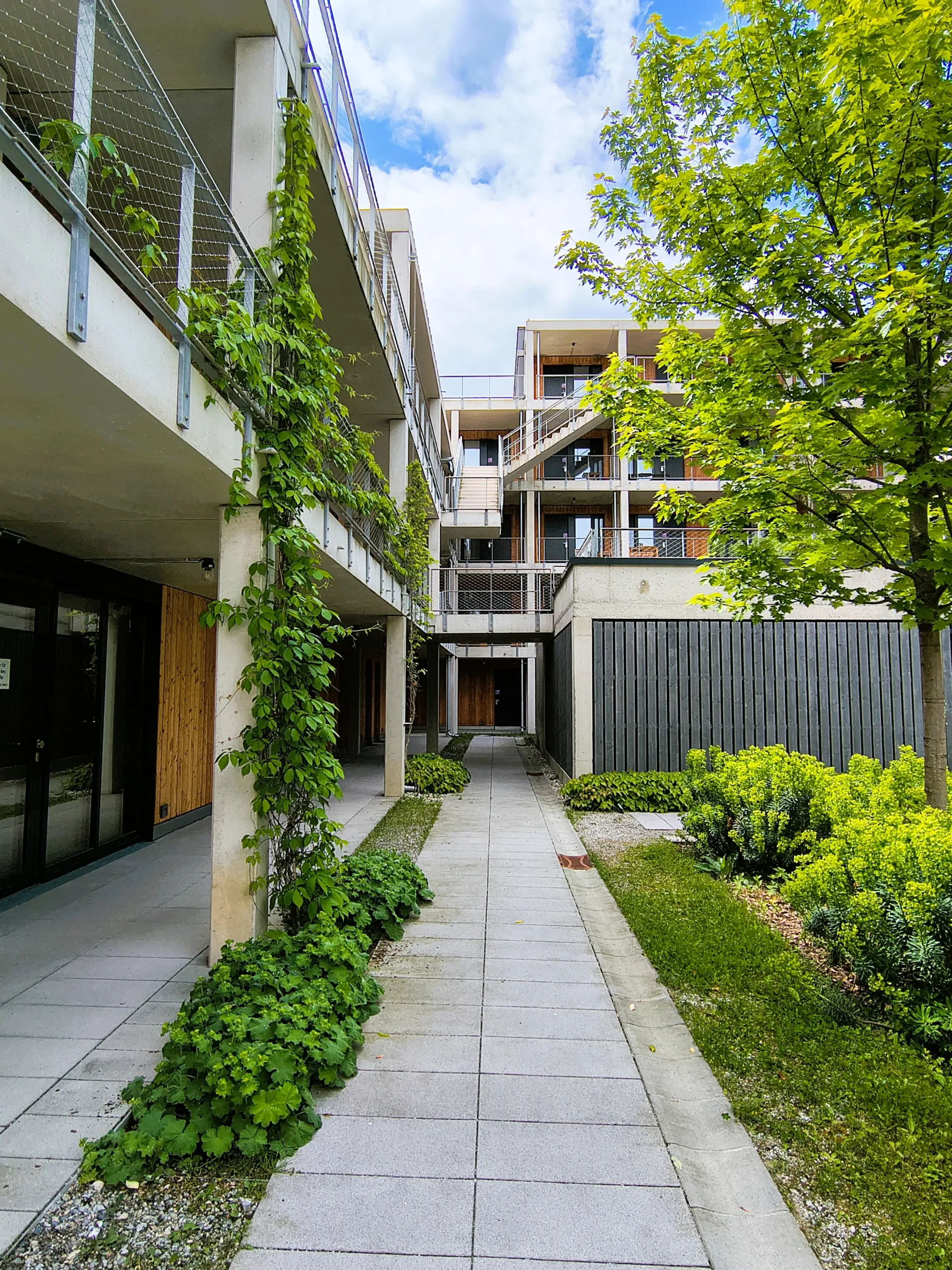
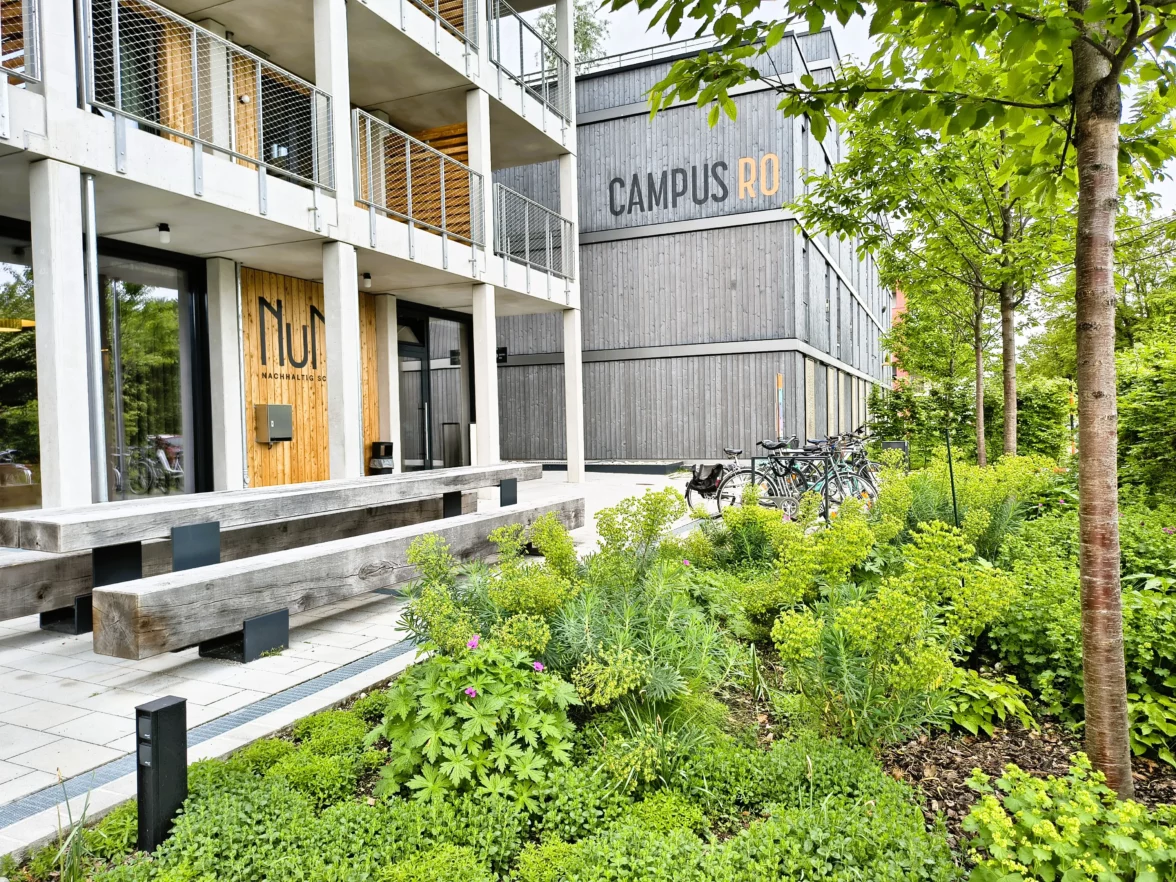
The Project “Campus Ro“ is located in the immediate vicinity of Rosenheim University of Applied Sciences, but due to a lack of urban context, the concept must develop the quality of the living space from within. The primary goal is therefore to offer residents an innovative, enriching, and inspiring living environment for this formative period. The concept deliberately incorporates characteristics of small-scale urban structures and combines them into a living space that is both appropriately scaled and urban.
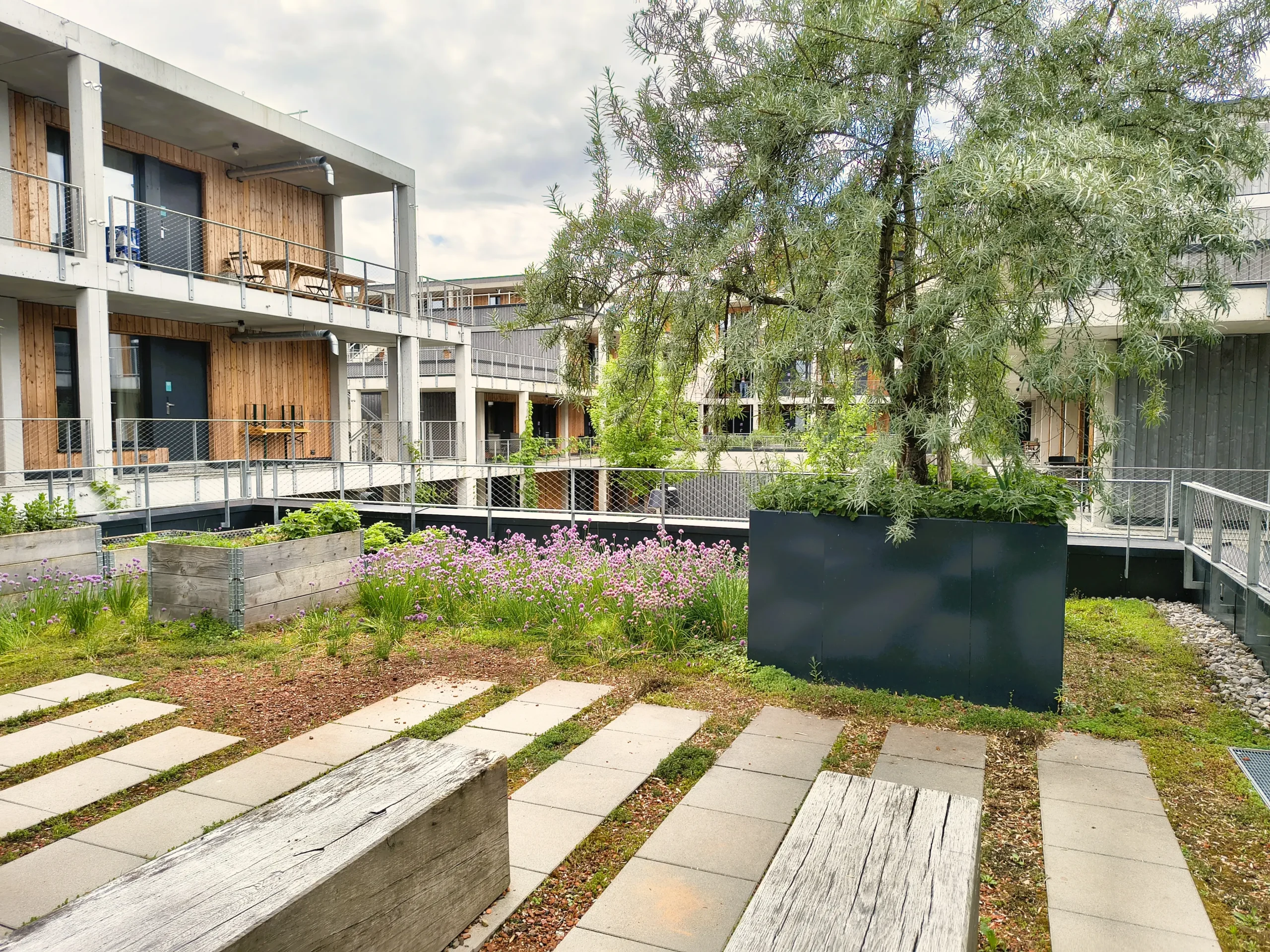
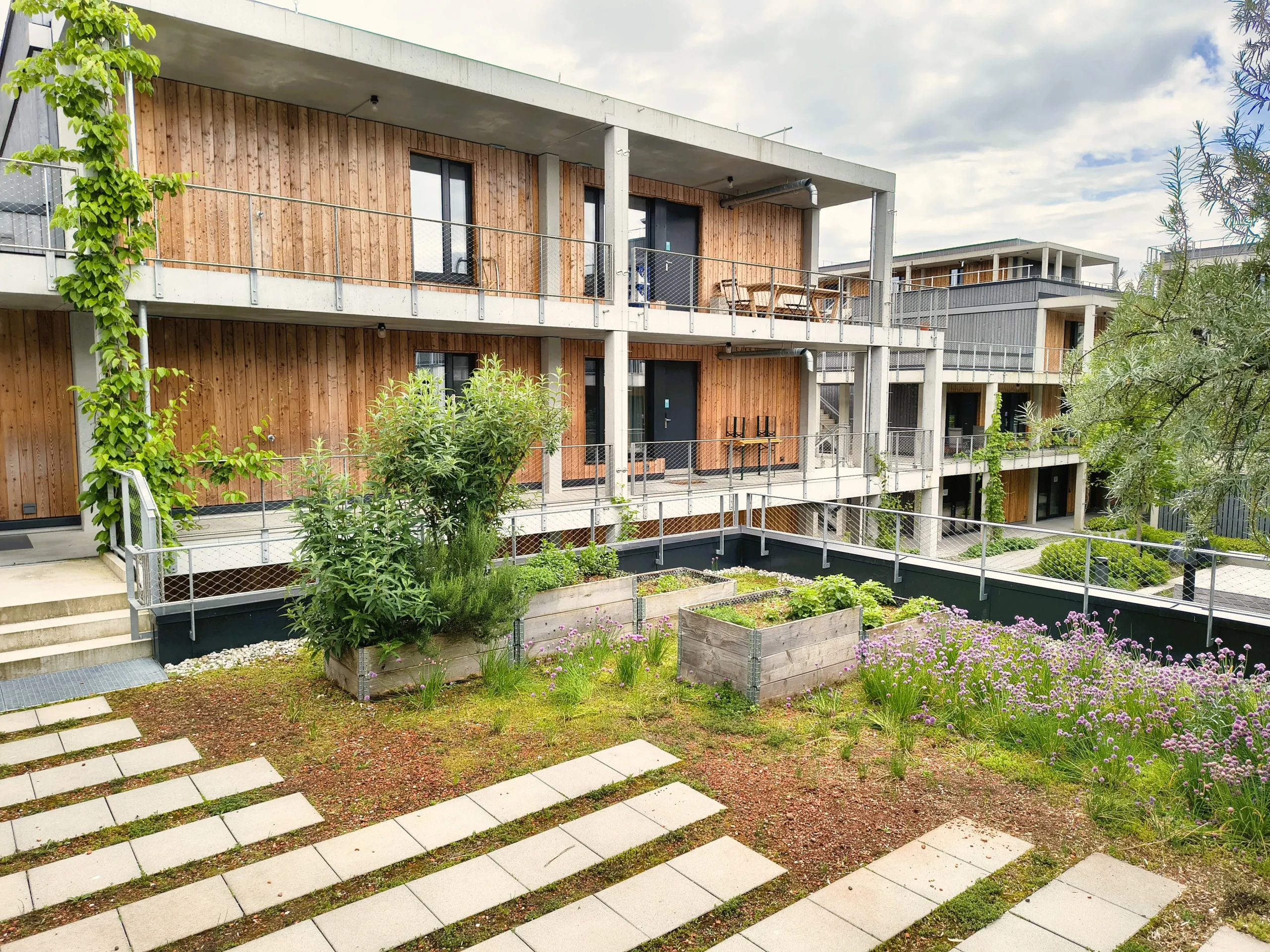
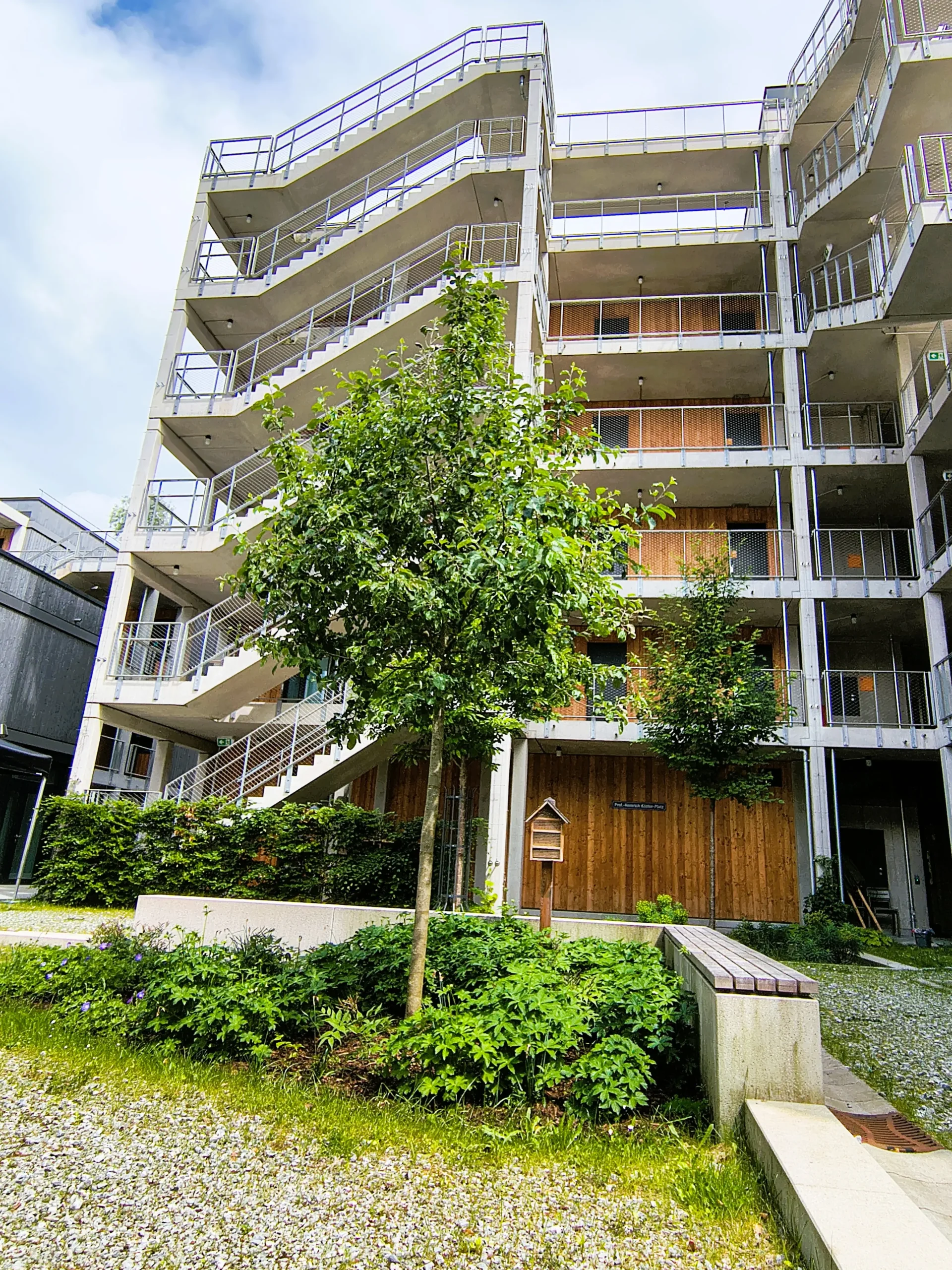
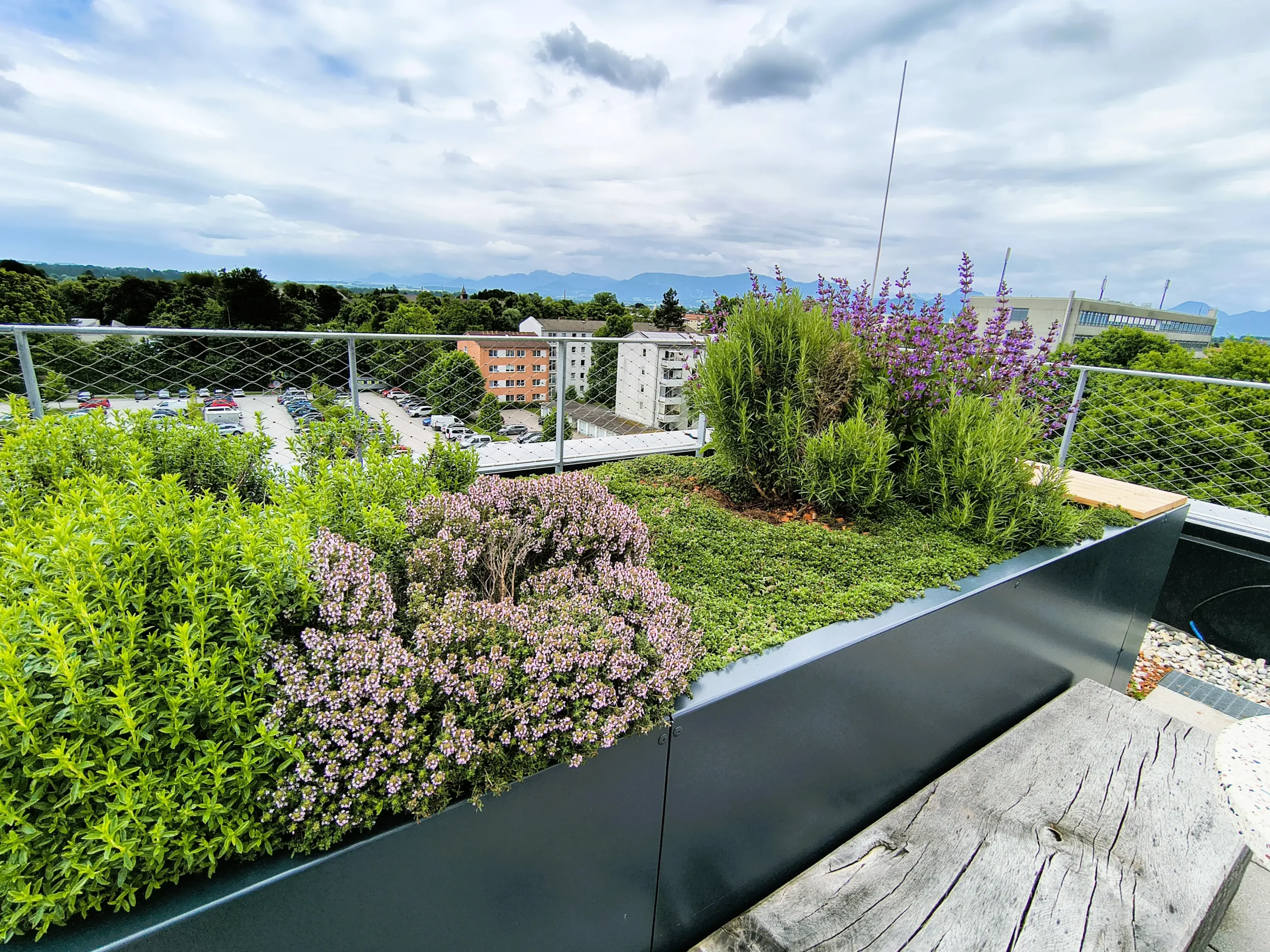
The settlement structure is continued three-dimensionally for further densification. The rows of houses are stacked and nested, and accessed via various staircases, paths, and galleries. All apartments are entered directly from the outside and have windows on two sides. Optimized for transparency, orientation, sunlight, and views, the stacking ranges from one to four stories. The resulting roof surfaces on different levels are integrated into the path system and used as roof top gardens. The proximity to the individual houses allows for immediate use by the residents.
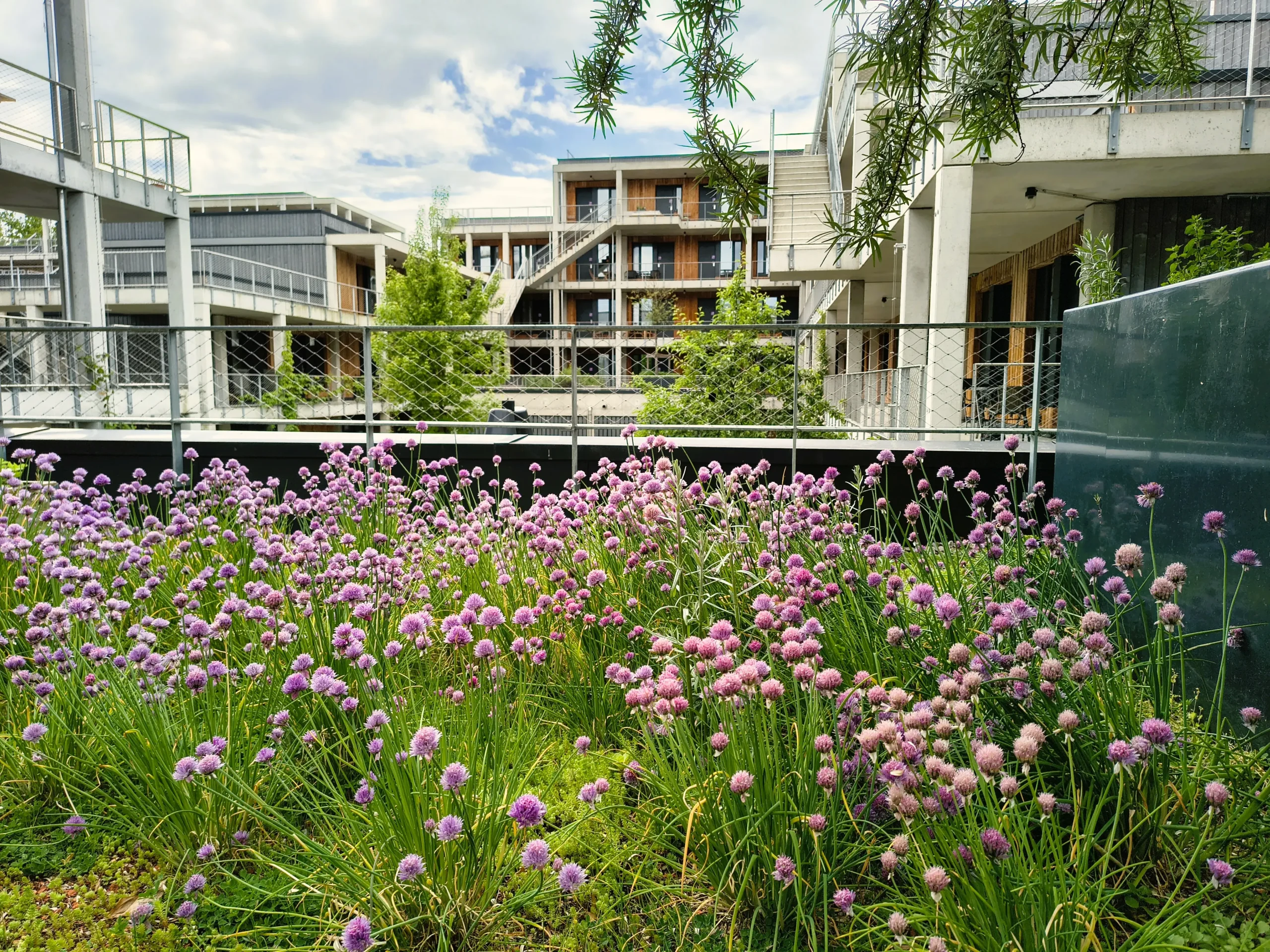
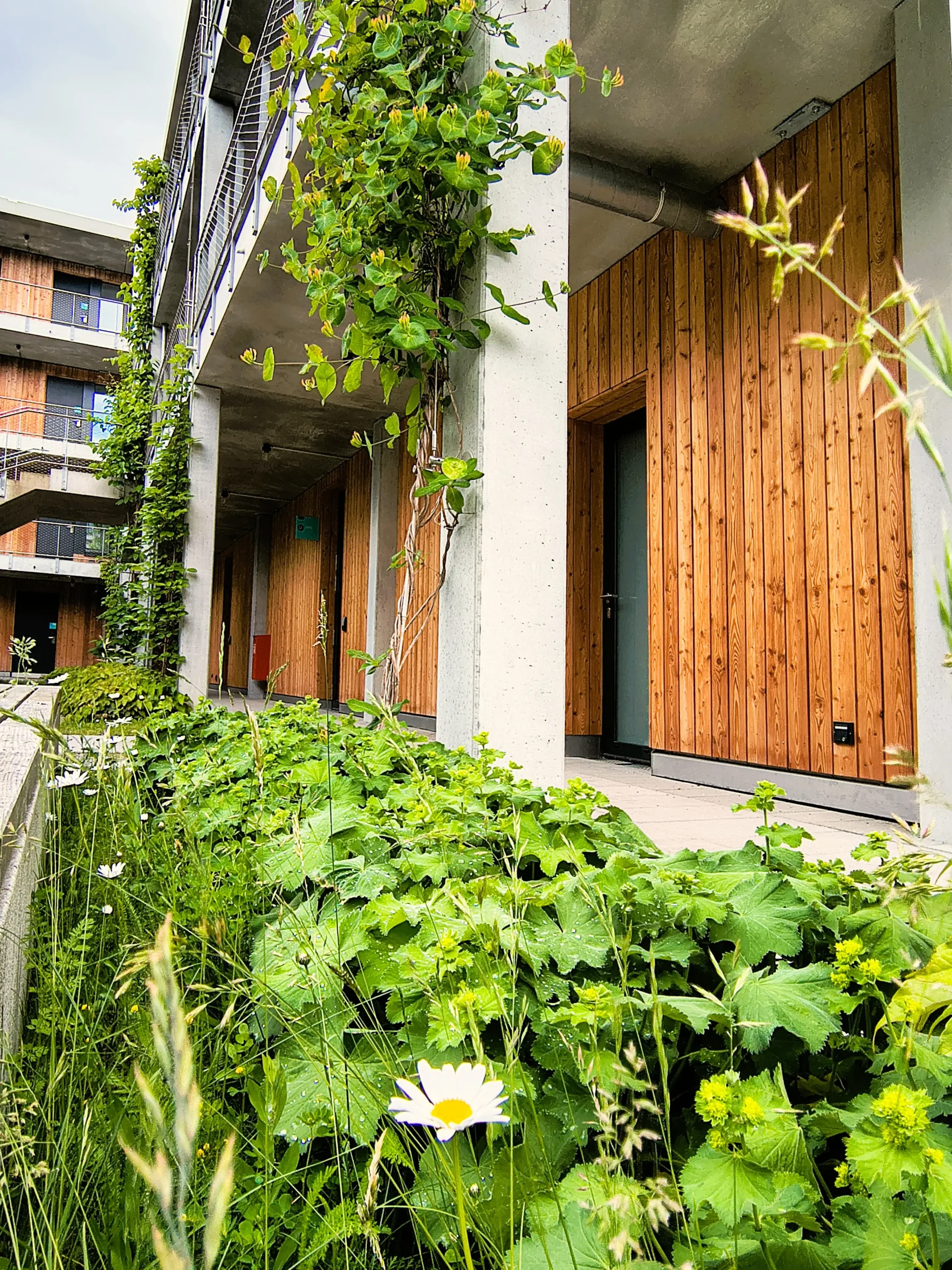
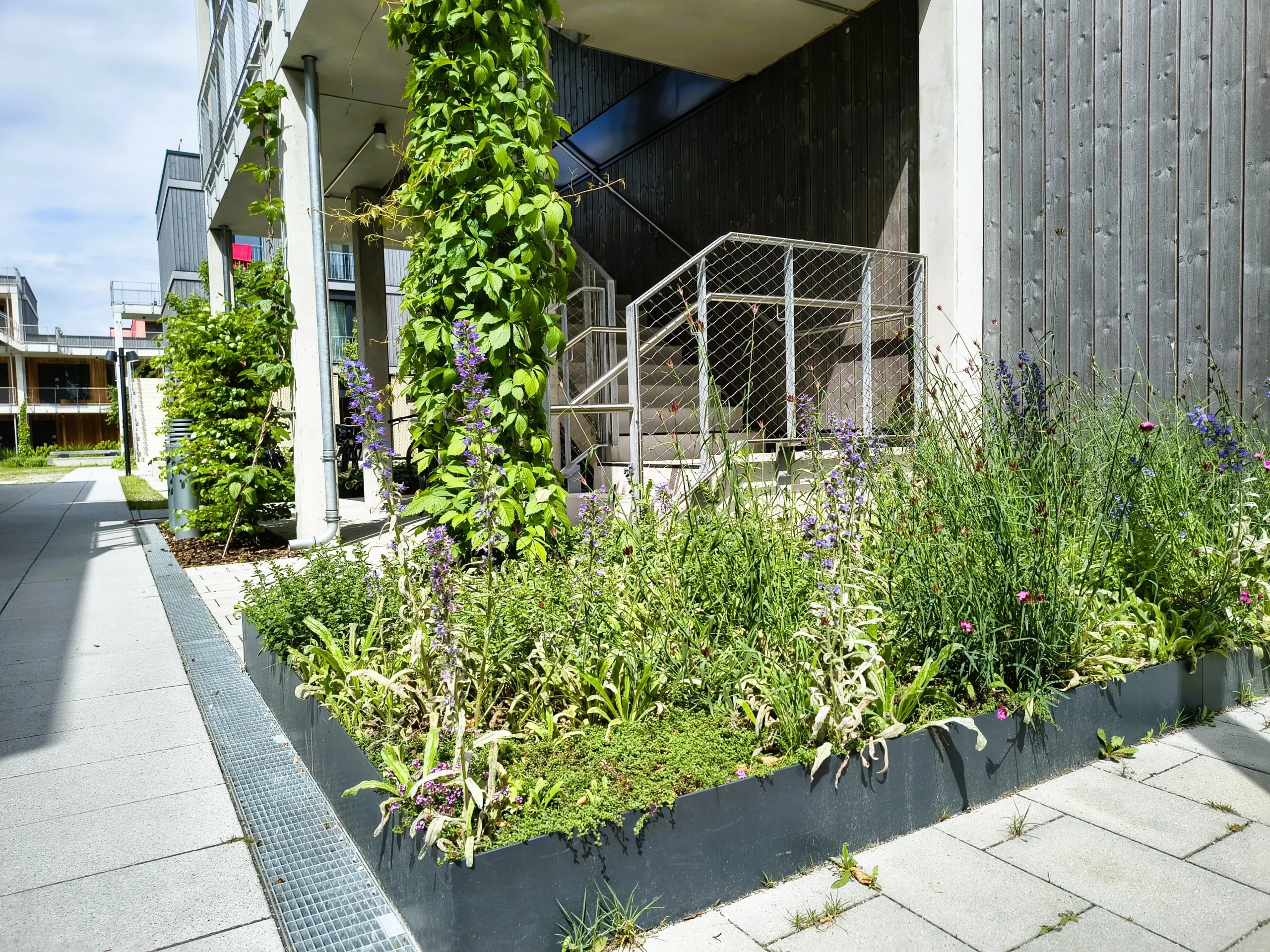
The network of paths and open spaces, plazas and gardens extends across all residential levels, offering diverse visual connections. Crucially, this multifaceted outdoor space, situated at the interface between public and private living areas, naturally creates a space for interaction among residents. The vertical greenery stretching between floors ensures that apartments receive sufficient shade and privacy. The inevitable encounters along the way to each apartment foster the development of social spaces and thus prevent any anonymity, despite the high number of residents.
The planting concept is based on robust Mediterranean plants such as oleaster (wild olive), ornamental onion, sedum, Virginia creeper, and evergreen honeysuckle, and provides habitat for many native bee and butterfly species.
A major goal of the design is to reuse rainwater from the roof surfaces to irrigate the planting areas, thus creating maximum sustainability in routine maintenance.
The project has received several sustainability awards.
* Platinum award from the German Council for Sustainable Building (DGNB)